

The dispute began in November 2025, when the private evangelical Christian college sued the Chicago Board of Education over a requirement that colleges in its student teaching program follow rules that Moody said conflicted with its religious mission. The district then barred Moody students from the program, triggering a four-month legal standoff.
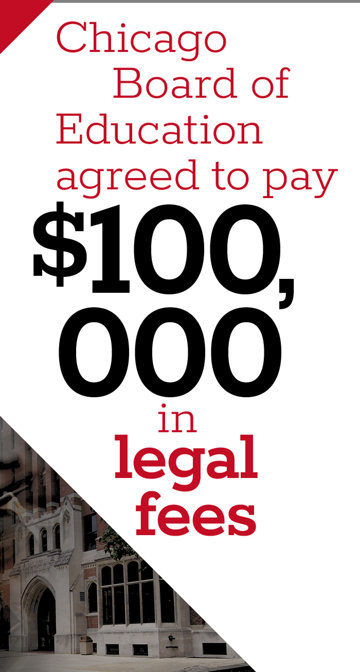
Under the new settlement, Chicago Public Schools (CPS) modified its Student Teacher Internship Agreement, added Moody to its list of approved university partners, and the Board of Education agreed to pay $100,000 in legal fees to the college’s counsel, Alliance Defending Freedom (ADF).
“We are deeply grateful that a resolution has been reached affirming our constitutional right to hire individuals who are aligned with our core mission.”
Moody, founded in 1886 by evangelist Dwight L. Moody, argued that CPS’ conditions forced it to choose between participation in a public program and adherence to its religious identity. According to the college and its attorneys, the district required participating institutions to agree that they would not discriminate in employment on grounds including religion, gender identity or expression, and sexual orientation. Moody maintained that its policy of hiring individuals who share and live out its Christian beliefs is integral to its mission.
According to a statement provided to Freedom Magazine by Illinois State Board of Education (ISBE) Press Secretary Lindsay Record, Moody’s elementary education degree program—approved at the state level in January 2024—“met the requirements” of Illinois law and administrative rules for preparing candidates for licensure. Nevertheless, CPS, at the local level, demanded compliance with its nondiscrimination requirements and excluded the program when Moody declined.
The case highlights a central issue: Even when a program is approved by the state, it cannot operate if local districts deny access to the classroom placements required for student teaching, as CPS did with Moody. Those placements—classroom observation, practicum and student teaching—are controlled at the district level and are essential to completing licensure. By refusing to allow Moody students to participate unless the college changed its hiring policies, CPS effectively prevented them from completing the final step of their training, leaving candidates unable to progress despite having completed their coursework.
For Moody officials, the settlement restores a critical step in professional training. “We are deeply grateful that a resolution has been reached affirming our constitutional right to hire individuals who are aligned with our core mission and biblical values,” Moody Provost and Senior Vice President Tim Sisk said. He added that Moody’s elementary education students are “eager and well prepared” to participate in the CPS student teaching program, describing it as “an essential and formative part of their journey toward becoming effective educators.”
ADF Senior Counsel Jeremiah Galus also argued that public officials “can’t inject themselves illegally and unconstitutionally into a religious nonprofit’s hiring practices,” and that “Chicago desperately needs more teachers to fill hundreds of vacancies, and Moody’s students will be well-equipped and qualified to help meet that need.”
Chicago Public Schools, for its part, framed the resolution as a negotiated accommodation. In a statement reported by Fox News, the district said it “values its partnerships” and remains committed to providing students with “a safe and welcoming environment to focus on their education,” adding that the revised student teaching agreement aligns with “the constitutional rights of faith-based organizations.”
By allowing Moody’s participation in student teaching—the final, supervised component required to complete educator preparation programs and qualify for licensure—the settlement reopens a pathway that had been blocked for roughly four months. As a result, students enrolled in Moody’s elementary education program can now complete the sequence required to enter the profession.
Beyond this dispute, courts are increasingly scrutinizing whether public programs can exclude religious institutions based on their identity or practices.
The lawsuit itself has been dismissed following the settlement, leaving no ruling on the underlying constitutional questions. But the outcome leaves unresolved a central tension: how far public institutions can go in setting participation requirements without infringing on religious beliefs—a question likely to surface more often nationwide.