

In Mexico, madres are serenaded by mariachi bands.
In Peru, families visit cemeteries to honor mothers, aunts and grandmothers who have passed on.
In America, the MO is to let Mom sleep in and bring her coffee in bed, along with cards, flowers and brunch reservations.
But before Mother’s Day became a gift-wrapped Hallmark holiday in America, it was rooted in something far more meaningful: mothers organizing to improve lives, protect families, heal communities and serve those in need.
“A mother’s love is new every day,” she said. “God bless our faithful, good mothers.”
The holiday’s founder, Anna Jarvis, was neither wife nor mother. She was named after her own mother, Ann Jarvis, born in 1832 into a Methodist family that instilled in her the Christian values of service and selfless giving.
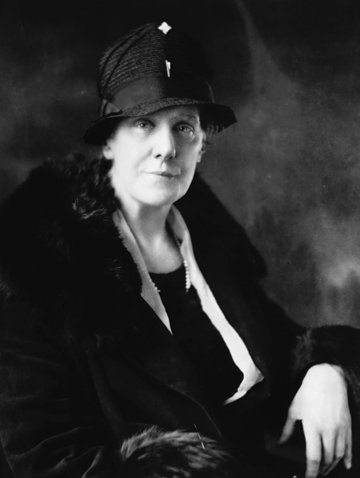
Ann carried those values into action. Across West Virginia, she organized mothers’ work clubs, uniting women to improve health and living conditions in their towns. They raised money for medicine, hired nurses for tuberculosis patients, and inspected food and milk supplies for safety. Through their work, Ann’s clubs demonstrated that motherhood is an active role, and that a mother’s care could extend beyond her household to an entire community.
When the Civil War broke out, the mothers’ work clubs were already organized, trusted and ready to serve. Ann insisted that the clubs remain neutral, ministering to wounded soldiers from both the Union and the Confederacy. They also raised money to feed and clothe soldiers in need on both sides. At a time when the country was tearing itself apart, mothers were working to bring their communities—and their country—together again.
In the summer of 1865, with the war now over and wounds still raw, Ann organized a Mother’s Friendship Day at her local courthouse to bring together families divided by lingering bitterness in the wake of the conflict. Despite fears that violence would erupt, the gathering succeeded in bringing former enemies together, and Mother’s Friendship Day continued annually for several years.
Ann knew grief intimately: Seven of her 11 children died in childhood. Yet she continued to help heal the wounds of others. In Grafton, West Virginia, her husband saw to the building of Andrews Methodist Church, where Ann taught Sunday school weekly until the final years of her life.
Following Ann’s death, her daughter honored her at Andrews Methodist Church with a tribute that became the seed of a national movement. There, Anna pledged herself to a nationally observed Mother’s Day, one that would honor the Christian womanhood her mother had lived in faith and service to others.
The following year, on May 10, 1908, the first official Mother’s Day service was held. Five thousand gathered to hear Anna Jarvis speak, and another 15,000 had to be turned away for lack of space.
“A mother’s love is new every day,” she said. “God bless our faithful, good mothers.”
The service moved at least one listener to action. West Virginia Supreme Court of Appeals Judge Ira E. Robinson proposed that the second Sunday in May be designated “Mother’s Day.” The proposal was adopted and Andrews Methodist Church became known as the Mother Church of Mother’s Day. From there, the observance moved steadily into public life: Two years later, West Virginia’s governor issued the first Mother’s Day Proclamation, and in 1914, Congress passed a joint resolution establishing the holiday nationally, which President Woodrow Wilson then signed into law.
Anna Jarvis lived long enough to see Mother’s Day become a national tradition, beloved by millions but increasingly surrounded by the cards, flowers and commercial customs she feared would obscure its deeper purpose of sacrifice, service and charity.
Yet perhaps she would take comfort in knowing that in many countries—the UK, Nigeria and Haiti among them—Mother’s Day is still marked by church services, with prayers and songs of gratitude. And perhaps she would smile at hearing of the countless acts of volunteerism and community outreach by faith communities, carried out not just on Mother’s Day or special occasions, but every day—a practice her own mother pioneered.
Because in the end, Mother’s Day was never about flowers, cards or brunch reservations. Those are gestures of gratitude, and worthy ones. But the day’s deeper meaning is found in the kind of love that takes action: feeds, nurses, clothes, comforts, reconciles, teaches and lifts.
That is the love Ann Jarvis lived. It is the love mothers give every day. And it is the spirit of service that still has the power to uplift whole communities—and, beyond them, our entire world.